Music and technology share a deeply intertwined history, with each innovation pushing the boundaries of artistic expression. From the first electronic instruments to today’s AI-driven composition tools, technology has consistently provided new palettes for creators. Nowhere is this synergy more evident than in the evolution of the synthesizer and its profound impact on the art of the film score. Synthesizers did not just introduce new sounds; they unlocked entirely new worlds of emotion and atmosphere, giving composers the power to craft soundscapes that were previously unimaginable. This guide explores the journey of the synthesizer, the fundamental principles of effective film scoring, and how these two domains have merged to define the sound of modern cinema and point the way toward the future of music itself.
The Evolution of Sound: From Acoustic to Electronic
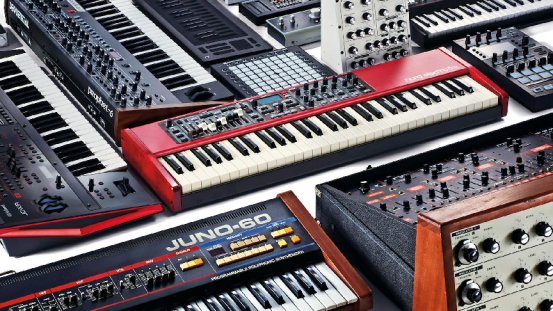
The journey into electronic music begins with the synthesizer, an instrument that fundamentally changed music production. Unlike acoustic instruments that produce sound through physical vibration, a synthesizer generates audio signals electronically. This core difference allows for an unprecedented level of control over every aspect of a sound, from its pitch and timbre to its volume and duration. This technological leap has reshaped countless music genres and continues to be a driving force of innovation.
The Birth and Rise of the Synthesizer
The earliest electronic instruments appeared in the early 20th century, but it was the development of more compact and user-friendly synthesizers in the 1960s, pioneered by figures like Robert Moog and Don Buchla, that sparked a revolution. These early analog synthesizers were modular, complex machines that allowed musicians to patch together different components to create unique sounds. They quickly found a home in experimental music and progressive rock, but their influence soon spread. By the 1970s and 80s, synthesizers became central to genres like new wave, synth-pop, and electronic dance music, with their distinct sounds defining the era’s sonic landscape.
The Digital Age: Software Synthesizers and VSTs
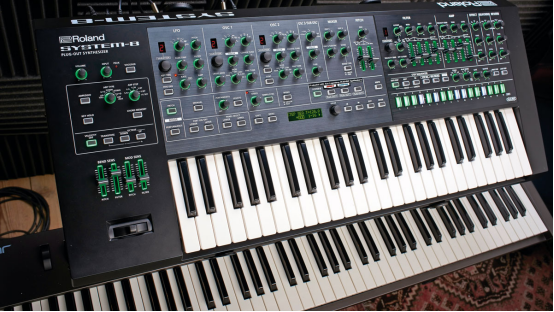
The next major leap came with the digital revolution. The development of digital synthesis and, crucially, Virtual Studio Technology (VST), moved the synthesizer from a bulky piece of hardware into the computer. Software synthesizers, or “soft synths,” emulate their hardware counterparts and offer even greater flexibility. This democratization of technology meant that a powerful recording studio’s worth of sounds could be accessed on a single laptop. VSTs allow these instruments and effects to be seamlessly integrated into Digital Audio Workstations (DAWs), making them a cornerstone of modern music production across all genres, from pop to hip-hop to classical and, most significantly, film scoring.
The Emotional Core of Cinema: The Art of the Film Score
A film’s score is its unspoken narrator, a powerful force that guides the audience’s emotional journey. It can build suspense, evoke joy, signal danger, or deepen a character’s internal struggle, often working on a subconscious level. An effective film score is not merely background music; it is an integral part of the storytelling, enhancing the atmosphere and adding layers of meaning to the visual narrative. Composers use a variety of musical elements to achieve this profound impact.
Key Elements for Enhancing Atmosphere
Crafting the perfect atmosphere requires a masterful manipulation of musical components. Each element plays a specific role in shaping the audience’s perception and emotional response.
- Harmony and Tonality: The choice between major and minor keys is a fundamental tool. Major keys are typically associated with happiness, triumph, and stability, while minor keys often evoke sadness, tension, or mystery. Dissonant chords and unresolved harmonies can create a sense of unease or suspense, perfect for thrillers or horror films.
- Tempo and Rhythm: The speed of the music directly influences the pacing of a scene. A slow, deliberate tempo can create a feeling of melancholy or grandeur. Conversely, a fast, driving rhythm can build excitement and anxiety, mirroring the action on screen, such as in a chase sequence.
- Instrumentation: The choice of instruments is critical. A full orchestra can convey epic scale and timeless emotion. A lone piano might suggest intimacy or loneliness. The introduction of electronic instruments, like synthesizers, opened up a new vocabulary for composers to create otherworldly, futuristic, or unsettling textures that traditional instruments could not.
The Power of the Leitmotif
A leitmotif is a recurring musical theme or phrase associated with a particular character, place, idea, or object. First popularized by Richard Wagner in his operas, this technique is now a staple of film scoring. A well-crafted leitmotif acts as a powerful narrative device. For example, a hero’s theme might be bold and triumphant, while a villain’s could be dark and menacing. By reprising, varying, and combining these themes, a composer can subtly comment on the story, foreshadow events, and illustrate the evolving relationships between characters without a single word of dialogue.
Synthesizers in Cinema: Crafting Modern Soundscapes
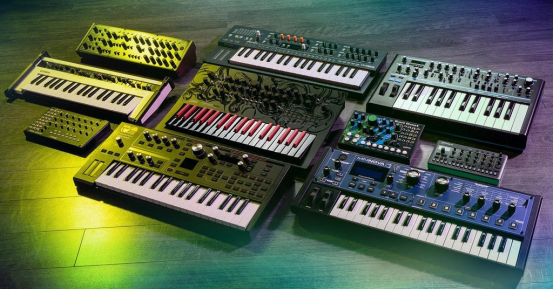
The marriage of synthesizers and film scoring was a watershed moment in cinematic history. It allowed composers to break free from the constraints of traditional orchestration and venture into uncharted sonic territory. Synthesizers gave filmmakers the ability to create atmospheres that were truly alien, futuristic, or psychologically unsettling, perfectly complementing genres like science fiction, horror, and fantasy.
Creating Otherworldly Atmospheres
Before synthesizers, representing the sound of outer space or a dystopian future was a challenge. Composers relied on avant-garde orchestral techniques, but the synthesizer provided a native language for these concepts. The ability to generate entirely new textures, drones, and ambient pads allowed for the creation of immersive and convincing soundscapes. The ethereal and often unnerving sounds of a synth could instantly transport an audience to another planet or a different dimension, making the impossible feel real.
Iconic Film Scores Defined by Synthesizers
The impact of synthesizers on cinema can be heard in some of its most memorable scores. Composers like Vangelis with his work on Blade Runner and Chariots of Fire, and Wendy Carlos on A Clockwork Orange and Tron, demonstrated the instrument’s immense emotional and atmospheric range. John Carpenter famously used synthesizers to create the iconic, minimalist tension in his horror films like Halloween. These scores proved that electronic music could be as thematically rich and emotionally resonant as any orchestral piece, and they paved the way for the hybrid scores common today, which expertly blend electronic and acoustic elements.
The Future of Music Creation: AI and Algorithmic Composition
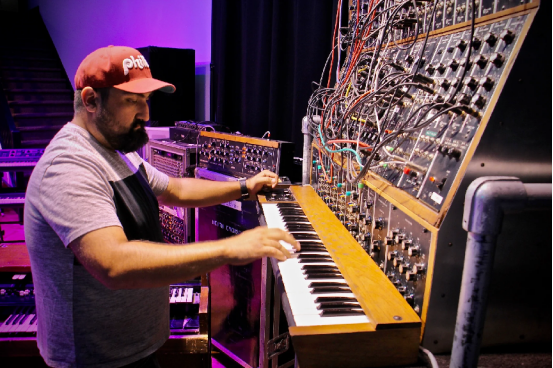
Just as the synthesizer revolutionized music in the 20th century, Artificial Intelligence (AI) is poised to redefine it in the 21st. The future of music, both in popular genres and film scoring, is increasingly intertwined with machine learning and algorithmic processes. These technologies are not replacing human creativity but are instead becoming powerful new tools that augment and accelerate the compositional process.
How AI is Changing Music Production
AI is already being integrated into the music production workflow in several ways. AI-powered software can assist with mixing and mastering, suggest chord progressions, or even generate entire melodies based on a set of parameters. For composers, this means the ability to quickly prototype ideas, create complex harmonic textures, or generate hours of ambient music for video games or films. These tools can analyze existing music to learn the “rules” of a particular style and then create new, original pieces in that same vein.
The Evolving Role of the Composer
The rise of AI does not signal the end of the human composer. Instead, it shifts the composer’s role from being a creator of every single note to being a curator, director, and visionary. A composer might use an AI to generate a foundational theme and then spend their time refining, orchestrating, and imbuing it with human emotion and nuance. The future composer will be a collaborator with technology, using AI as an infinitely creative partner to explore new sonic possibilities at a speed and scale that was previously impossible. This collaboration promises a future of even more diverse, dynamic, and emotionally powerful music for film and beyond.
Frequently Asked Questions (FAQ)
- What is the core difference between an analog and a digital synthesizer?
- The primary difference lies in how they generate sound. An analog synthesizer uses physical electronic circuits, like oscillators and filters, to create and shape electrical voltage, resulting in a sound wave. This process can introduce subtle imperfections that many musicians find warm and organic. A digital synthesizer, on the other hand, uses microprocessors and algorithms to generate sound numerically. This allows for more complex and repeatable sounds and is the basis for software synthesizers (VSTs) that run on computers.
- How does a film score use leitmotifs to tell a story?
- A leitmotif is a recurring musical idea tied to a character, place, or concept. For example, in Star Wars, Darth Vader’s theme (“The Imperial March”) immediately signals his presence and conveys a sense of power and dread. Composers can cleverly alter the leitmotif to reflect changes in the story. If a villain is weakened, their theme might be played on a softer instrument or in a minor key. If two characters fall in love, their individual leitmotifs might be woven together to create a new, combined theme, musically representing their union.
- Can AI actually compose music with genuine emotion?
- Currently, AI composes music by recognizing and replicating patterns associated with human emotions. It can analyze thousands of “sad” songs and learn the musical characteristics (slow tempo, minor keys, specific chord progressions) to generate a new piece that humans would also perceive as sad. While the AI itself does not “feel” emotion, it is becoming increasingly proficient at creating music that elicits a strong emotional response in the listener. The “genuine emotion” still comes from the human composer who guides the AI and makes the final artistic choices.
- What are some modern films that effectively blend orchestral and synthesizer sounds?
- The hybrid score is a staple of modern blockbusters. Composers like Hans Zimmer are masters of this technique. His scores for films like Inception and Blade Runner 2049 (co-composed with Benjamin Wallfisch) are perfect examples. They combine the epic scale and emotional power of a traditional orchestra with the unique textures, driving rhythms, and deep bass frequencies of synthesizers to create massive, immersive, and contemporary-sounding scores.