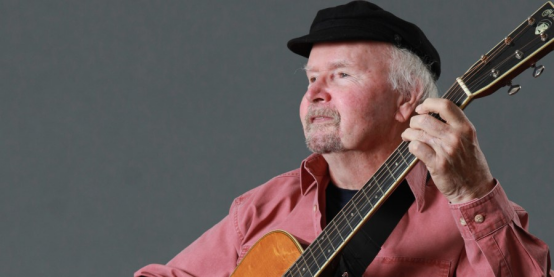
Folk music has always served as the heartbeat of human experience, a genre where the simplicity of acoustic instrumentation meets the complexity of the human soul. Throughout the decades, certain artists have transcended the genre, using their voices not just to entertain, but to document history, challenge authority, and map the internal landscapes of the heart. This pillar page explores the lives, musical contributions, and enduring legacies of five quintessential folk icons: Vic Chesnutt, Sandy Denny, Joni Mitchell, Joan Armatrading, and Joan Baez.
Vic Chesnutt: The Beauty of Imperfection and Resilience
Vic Chesnutt was an artist whose work was defined by a raw, unvarnished honesty that few could match. Born in 1964 and raised in Zebulon, Georgia, Chesnutt’s life was irrevocably changed by a car accident at the age of 18 that left him partially paralyzed. This physical limitation, however, became the crucible for his unique artistic voice—a “broken voice” that resonated with a Southern Gothic intensity and a profound sense of tenacity.
The Aesthetic of the Broken Voice
Chesnutt’s singing was never about technical perfection; it was about the transmission of truth. His voice was often described as fragile, wavering, and deeply idiosyncratic. This “brokenness” allowed him to explore themes of mortality, disability, and the mundane struggles of life with a level of intimacy that felt almost voyeuristic. By embracing his vocal limitations, he created a new standard for authenticity in indie-folk music.
Discovery and the Athens Scene
Discovered by Michael Stipe of R.E.M. in the late 1980s, Chesnutt quickly became a cornerstone of the Athens, Georgia, music scene. Stipe produced Chesnutt’s first two albums, Little (1990) and West of Rome (1991). These records showcased his ability to blend dark humor with devastating poignancy. His songwriting was characterized by sharp observations and a refusal to romanticize his condition, opting instead for a gritty realism that earned him a devoted cult following.

Sandy Denny: The Luminous Star of British Folk-Rock
In the landscape of 1960s and 70s British music, Sandy Denny stood as a figure of unparalleled vocal grace. As the lead singer of Fairport Convention and a prolific solo artist, she bridged the gap between traditional English folk and the burgeoning rock movement, creating a sound that was both ancient and modern.
The Definitive Voice of Fairport Convention
Denny’s arrival in Fairport Convention marked a turning point for the band. Her influence shifted their focus toward traditional British ballads, reimagined through the lens of electric instrumentation. The album Liege & Lief is widely considered the blueprint for British folk-rock, with Denny’s crystalline vocals providing the emotional anchor for tracks like “Matty Groves” and “Tam Lin.”
“Who Knows Where the Time Goes?”
Perhaps Denny’s most enduring contribution to the musical canon is her composition “Who Knows Where the Time Goes?” Originally recorded with the Strawbs and later made famous by Judy Collins, the song captures a universal sense of longing and the ephemeral nature of time. Denny’s own version remains a masterclass in vocal restraint and emotional resonance, solidifying her reputation as one of the greatest singer-songwriters of her generation.

Joni Mitchell: The Painting Poet of Folk Music
Joni Mitchell is often described as a “painting poet,” an artist who approaches songwriting with the eye of a visual artist and the soul of a philosopher. Her career is a testament to constant evolution, moving from the folk clubs of Toronto and New York to the sophisticated heights of jazz-fusion and pop-rock.
The Confessional Masterpiece: Blue
In 1971, Mitchell released Blue, an album that redefined the “confessional” singer-songwriter genre. With unprecedented vulnerability, she explored the highs and lows of love, independence, and the search for meaning. Tracks like “A Case of You” and “River” utilized her unique guitar tunings—a result of her childhood battle with polio—to create lush, harmonic textures that were entirely new to folk music.
Technical Innovation and Alternative Tunings
Mitchell’s technical contributions to music cannot be overstated. Because her left hand was weakened by polio, she developed dozens of open tunings to make complex chords easier to play. This innovation led to the “Mitchell sound”—a rich, ringing resonance that became her sonic signature. Her willingness to experiment eventually led her to collaborate with jazz legends like Jaco Pastorius and Charles Mingus, proving that folk music could be as sophisticated as any other art form.

Joan Armatrading: Navigating Interior Landscapes
Joan Armatrading occupies a unique space in the folk and blues world. As the first Black British woman to achieve international success as a singer-songwriter, she broke through racial and gender barriers with a style that was fiercely independent and deeply introspective.
The Ambassador of Emotion
Armatrading’s music is characterized by its emotional directness. Her breakthrough hit, “Love and Affection,” showcased her ability to articulate the complexities of human relationships with both strength and sensitivity. Unlike many of her contemporaries, Armatrading often played all the instruments on her demos, maintaining a high level of creative control over her sound.
Genre-Blending and Self-Exploration
Throughout her career, Armatrading has refused to be pigeonholed. Her work seamlessly integrates elements of folk, jazz, blues, and pop. This versatility is evident in her extensive discography, where she explores themes of identity, self-worth, and the quiet moments of daily life. Her influence can be seen in generations of artists who value musical autonomy and emotional honesty above commercial trends.

Joan Baez: The Holy Voice of the Folk Protest Movement
Joan Baez is more than a musician; she is a symbol of the conscience of a generation. With her pure, three-octave soprano and unwavering commitment to social justice, she became the “Holy Voice” of the 1960s protest movement, using her platform to advocate for civil rights and non-violence.
Music as a Tool for Social Change
Baez’s early career was defined by her interpretations of traditional ballads and her role in the civil rights movement. She performed at the 1963 March on Washington and was a frequent presence at rallies and sit-ins. For Baez, music was never just about the melody; it was a vehicle for activism. She famously refused to play in segregated venues, putting her career on the line for her principles.
The Relationship with Bob Dylan
Baez played a crucial role in the career of Bob Dylan, introducing him to her massive audiences and recording many of his songs. Their partnership was both musical and romantic, representing the pinnacle of the folk revival. However, Baez remained a formidable artist in her own right, with albums like Diamonds & Rust showcasing her ability to write poignant, autobiographical material that matched the depth of her protest songs.

Comparing the Legacies: A Statistical Overview
While each of these artists operated within the broad umbrella of folk, their styles and impacts varied significantly. The following table highlights their primary musical focus and most influential era.
| Artist | Primary Genre/Style | Key Era | Core Themes |
|---|---|---|---|
| Vic Chesnutt | Southern Gothic / Indie Folk | 1990s – 2000s | Mortality, Disability, Realism |
| Sandy Denny | British Folk-Rock | Late 1960s – 1970s | Tradition, Melancholy, Time |
| Joni Mitchell | Folk / Jazz-Fusion | 1960s – 1980s | Vulnerability, Philosophy, Art |
| Joan Armatrading | Folk-Pop / Blues | 1970s – 1990s | Relationships, Independence |
| Joan Baez | Traditional Folk / Protest | 1960s – 1970s | Social Justice, Non-violence |
Frequently Asked Questions (FAQ)
- Q1: Why is Vic Chesnutt’s voice considered “broken”?
- Vic Chesnutt’s voice is described as “broken” because it lacked the polished, operatic quality of traditional singers. Due to his physical condition and his artistic preference for raw honesty, his singing often featured cracks, wavers, and a limited range, which he used to convey deep emotional truth and vulnerability.
- Q2: What was Sandy Denny’s contribution to Led Zeppelin?
- Sandy Denny is the only guest vocalist to ever appear on a Led Zeppelin studio album. she provided the haunting duet vocals for “The Battle of Evermore” on their untitled fourth album, showcasing her ability to bring a folk sensibility to hard rock.
- Q3: How did Joni Mitchell’s childhood illness affect her music?
- Joni Mitchell contracted polio at age nine, which weakened her left hand. This prevented her from playing standard guitar chords, leading her to create over 50 “open” tunings. These tunings gave her music its distinctive, complex harmonic structure and allowed her to develop a style that was uniquely her own.
- Q4: Is Joan Baez still active in activism today?
- Yes, Joan Baez has remained a dedicated activist throughout her life. While she retired from extensive touring in 2019, she continues to use her public platform to speak out on issues of human rights, environmental protection, and political reform.
- Q5: What makes Joan Armatrading a pioneer in the music industry?
- Joan Armatrading is a pioneer because she was the first Black British woman to achieve major international success as a singer-songwriter. She was also one of the first female artists in her genre to exert total control over her production and musical direction, paving the way for future independent female artists.