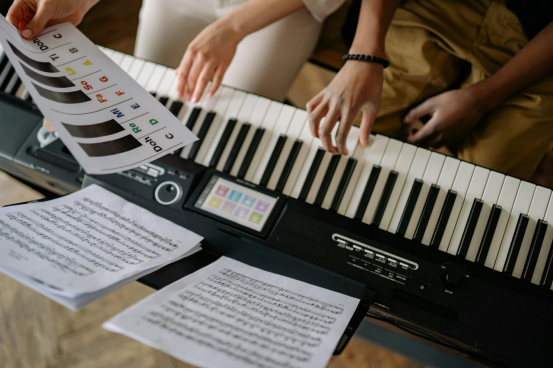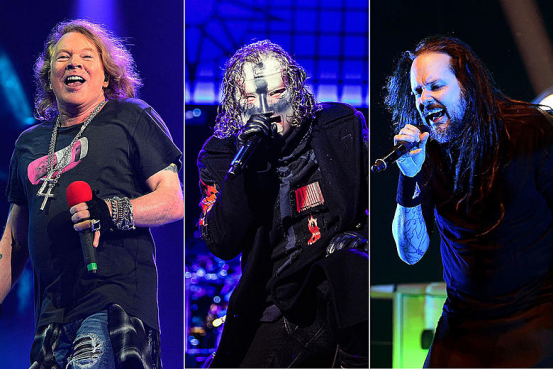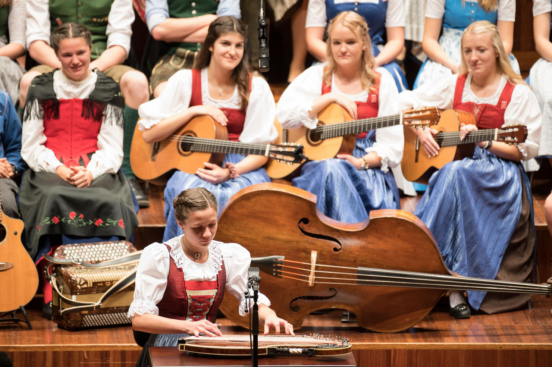
Music is the universal language of humanity, a profound auditory mirror reflecting the cultural, technological, and emotional evolution of society. From the unwritten melodies of ancient communities to the digitally synthesized beats of the modern era, the progression of musical styles is a testament to human innovation. This comprehensive pillar page meticulously deconstructs the history, mechanics, and cultural significance of major musical genres. By examining the origins of folk, the dramatic peaks of opera, the structural mastery of classical music, and the rebellious innovations of jazz, rock, and electronic music, we uncover the intricate tapestry that connects centuries of sonic exploration.
The Roots of Melody: The Origin and Definition of Folk Music
Before the advent of recording studios, formal conservatories, or even widespread musical notation, there was folk music. Serving as the foundational bedrock of all subsequent musical genres, folk music is inherently tied to the daily lives, struggles, and celebrations of ordinary people. It is a genre defined not by commercial success, but by oral tradition and community participation.
The Power of Oral Tradition
The transmission of folk music relies heavily on the oral tradition. Unlike classical music, which is rigidly documented on sheet music, folk songs are passed down from generation to generation by ear. This method of transmission means that folk music is entirely fluid; a single song might have dozens of regional variations. The lyrics often evolve to reflect contemporary events, making folk music a living, breathing historical document.
- Community Cohesion: Folk music was historically used to synchronize labor (work songs), celebrate harvests, and mourn losses, acting as the social glue for early communities.
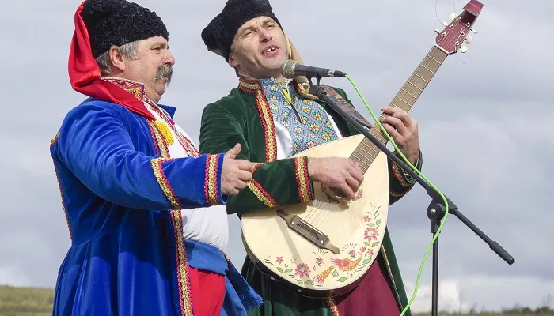
- Acoustic Instrumentation: Traditional folk relies on accessible, locally crafted instruments such as the acoustic guitar, banjo, fiddle, and simple percussion, emphasizing raw acoustic resonance over polished production.
- Narrative Storytelling: The lyrical content is usually narrative-driven, recounting epic tales, local legends, or expressing political dissent, which laid the groundwork for modern singer-songwriter genres.
The beauty of folk music lies in its unpretentious authenticity. It does not require virtuosic training to perform or appreciate. Instead, its value is measured by its emotional resonance and its ability to capture the zeitgeist of the working class.

The Theatrical Grandeur: The History and Development of Opera
If folk music represents the voice of the common people, opera represents the ultimate synthesis of high art. Emerging in Italy at the end of the 16th century, opera combined music, theater, visual arts, and dance into a single, overwhelming sensory experience known as “Gesamtkunstwerk” (a total work of art).
The Birth of the Florentine Camerata
The origins of opera can be traced back to the Florentine Camerata, a group of humanists, musicians, and poets in late Renaissance Florence. Their goal was to resurrect the musical storytelling of ancient Greek drama. They believed that polyphony (multiple overlapping vocal lines) obscured the text, so they developed “monody”—a single vocal line accompanied by simple instrumental chords—allowing the emotion of the words to take center stage. Jacopo Peri’s Dafne (1597) is widely considered the first true opera, setting the stage for a theatrical revolution.
Evolution Through the Eras
Opera did not remain static; it evolved dramatically alongside European cultural shifts. Each era brought new vocal techniques, orchestral expansions, and thematic complexities.
- The Baroque Era (1600-1750): Characterized by ornate vocal acrobatics and the rise of the “castrato” singers. Composers like George Frideric Handel dominated this period with complex, emotionally charged arias.
- The Classical Era (1750-1820): Wolfgang Amadeus Mozart reformed opera by integrating deeper psychological realism and seamless ensemble singing. Works like The Marriage of Figaro bridged the gap between comedic (Opera Buffa) and serious (Opera Seria) styles.
- The Romantic Era (1820-1900): The 19th century saw opera reach its zenith of scale and emotion. Giuseppe Verdi championed Italian nationalism with soaring melodies, while Richard Wagner revolutionized the form in Germany with “leitmotifs” (musical signatures for characters or ideas) and massive orchestral forces.
Opera remains a vital part of the classical tradition, demanding immense vocal power—singers must project over a full orchestra without electronic amplification—and offering a deeply immersive theatrical experience.

The Golden Age: From Bach to Beethoven and the Glory of Classical Music
The term “classical music” broadly encompasses Western art music from the medieval period to the present, but its absolute zenith occurred between the Baroque and Romantic eras. This period saw the codification of musical theory, the invention of modern orchestral instruments, and the creation of masterpieces that continue to define structural perfection.
The Mathematical Brilliance of J.S. Bach
Johann Sebastian Bach represents the pinnacle of the Baroque era. His music is defined by intricate counterpoint and polyphony, where multiple independent melody lines interweave with mathematical precision. Bach’s compositions, such as The Well-Tempered Clavier, not only pushed the boundaries of keyboard technique but also established the foundational rules of functional harmony that govern Western music to this day.
The Structural Perfection of the Classical Era
Following the dense complexity of the Baroque period, the Classical era (spearheaded by Haydn and Mozart) emphasized clarity, balance, and homophony (a clear melody supported by subordinate harmony). The invention of the sonata form provided a narrative structure for instrumental music—exposition, development, and recapitulation—allowing composers to craft long-form symphonies with profound logical cohesion.
Beethoven’s Romantic Revolution
Ludwig van Beethoven acts as the colossal bridge between the Classical and Romantic eras. While he mastered the strict forms inherited from Haydn and Mozart, Beethoven injected unprecedented emotional turbulence, dynamic contrasts, and structural expansion into his work. His Symphony No. 9 shattered conventions by introducing a full choir into a symphony, forever altering the trajectory of classical music from a polite aristocratic entertainment to a vehicle for profound personal and philosophical expression.
The Rhythmic Revolution: Jazz Improvisation and Innovation
As the 20th century dawned, a radical new musical language was born in the cultural melting pot of New Orleans, Louisiana. Jazz represents a fundamental departure from the strict, composer-dictated structures of European classical music, shifting the ultimate creative power into the hands of the performer through the art of improvisation.
The Anatomy of Swing and Syncopation
Jazz is an amalgamation of African polyrhythms, blues scales, and European harmonic structures. At its core lies “swing”—a propulsive, infectious rhythmic feel created by elongating the first note of a pair and shortening the second. Coupled with syncopation (stressing the off-beats), jazz creates a dynamic tension that compels physical movement and emotional engagement.
The Art of Spontaneous Composition
Improvisation is the beating heart of jazz. Unlike classical musicians who strive for flawless execution of a written score, jazz musicians engage in spontaneous, real-time composition. A typical jazz performance features a “head” (the main written melody) followed by extended solo sections where musicians spontaneously invent new melodies over the song’s chord progression.
- Bebop’s Complexity: In the 1940s, pioneers like Charlie Parker and Dizzy Gillespie transformed jazz from dance music into high art with Bebop. This subgenre featured blistering tempos, complex chord substitutions, and dizzying instrumental virtuosity.
- Modal Jazz and Freedom: Miles Davis’s Kind of Blue (1959) introduced modal jazz, where improvisations were based on scales (modes) rather than rapidly changing chords, granting musicians unprecedented melodic freedom and creating a cooler, more introspective sound.
Jazz’s emphasis on individual expression, active listening, and democratic ensemble interaction makes it one of the most intellectually and emotionally demanding genres in the history of music.

The Cultural Shift: The Birth of Rock and Roll
In the mid-1950s, a seismic cultural shift occurred with the birth of Rock and Roll. Emerging from the post-World War II economic boom and the collision of Rhythm and Blues (R&B), Gospel, and Country music, rock and roll was not just a musical genre—it was a youth-driven cultural revolution.
The Electrification of Sound
The technological catalyst for rock and roll was the invention and mass production of the solid-body electric guitar. Pioneers like Chuck Berry and Muddy Waters utilized amplification to cut through the noise of crowded dance halls, introducing distortion and feedback not as mistakes, but as powerful expressive tools. The electric guitar, paired with a driving snare drum backbeat, created an aggressive, high-energy sound that terrified the older generation and captivated the youth.
A Catalyst for Social Change
Rock and roll played a crucial role in breaking down racial barriers in a segregated America. White teenagers tuning into black radio stations to hear Little Richard and Fats Domino led to integrated concerts and a shared youth culture. When Elvis Presley brought this sound to mainstream television, the cultural paradigm shifted permanently.
As the genre evolved into the 1960s with bands like The Beatles and Bob Dylan, rock music became the definitive voice of counterculture, anti-war protests, and civil rights movements. It proved that popular music could transcend mere entertainment to become a potent vehicle for sociopolitical commentary.
The Digital Frontier: The Rise of Electronic Music
The late 20th and early 21st centuries introduced the most radical shift in musical production since the invention of the instrument itself: Electronic music. By liberating music from the physical constraints of acoustic instruments, electronic music expanded the sonic palette to infinite horizons.
From Synthesizers to Software
The journey of electronic music began in avant-garde laboratories with early instruments like the Theremin and massive modular synthesizers created by Robert Moog. In the 1970s, groups like Kraftwerk popularized the use of drum machines and synthesizers, creating cold, robotic soundscapes that laid the groundwork for modern pop.
The true explosion occurred with the advent of MIDI (Musical Instrument Digital Interface) and affordable digital audio workstations (DAWs). Suddenly, a single producer in a bedroom could compose, arrange, and mix an entire symphony of digital sounds. This democratization of music production birthed countless subgenres, from House and Techno in Chicago and Detroit to modern Dubstep and EDM (Electronic Dance Music).
- Sound Design as Composition: In electronic music, the creation of the sound itself (timbre) is often as important as the melody or harmony. Producers manipulate waveforms, filters, and envelopes to engineer entirely new auditory experiences.
- The DJ as the Modern Maestro: The live performance paradigm shifted from bands playing instruments to DJs manipulating tracks, controlling the energy of massive crowds through seamless mixing and dynamic drops.

Bridging the Eras: Differences Between Classical and Modern Music
To truly understand the evolution of musical styles, one must analyze the stark contrasts and surprising continuities between classical traditions and modern commercial music. While both seek to evoke emotion and communicate the human experience, their methodologies, structures, and consumption models differ vastly.
Structural Rigidity vs. Fluidity
Classical music is heavily reliant on the composer’s explicit instructions. The sheet music dictates not only the notes but the exact dynamics, tempo, and articulation. The performer’s role is to interpret the composer’s genius faithfully. Conversely, modern music (spanning jazz, rock, and electronic) is highly fluid. The recording is often the definitive version of a song, but live performances are expected to deviate, featuring improvised solos, altered arrangements, and audience interaction.
Comparative Analysis of Musical Paradigms
| Musical Element | Classical Music | Modern Music (Rock/Pop/Electronic) |
|---|---|---|
| Instrumentation | Strictly acoustic (strings, woodwinds, brass). | Heavily amplified, synthesized, and digitally processed. |
| Rhythm & Beat | Complex, fluctuating tempos; beat is often implied. | Strict, driving backbeat; highly dance-oriented and quantized. |
| Form & Length | Extended forms (Symphonies, Concertos) lasting 20-60 mins. | Concise, repetitive verse-chorus structures lasting 3-5 mins. |
| Creation Process | Composer writes score → Musicians read and perform. | Collaborative writing, studio production, and digital sampling. |
Despite these differences, modern music constantly borrows from classical traditions. The harmonic progressions found in today’s pop hits often mirror the functional harmony established by Bach, and the dramatic tension-and-release structures of modern EDM drops are direct descendants of Beethoven’s symphonic crescendos.
Frequently Asked Questions (FAQ)
- What is the main difference between folk music and classical music?
- The primary difference lies in transmission and intent. Folk music is traditionally passed down orally, created by and for the common people to reflect daily life, and is highly fluid in its performance. Classical music is formally composed, rigidly documented via sheet music, and historically associated with aristocratic patronage and formal concert settings.
- How did the invention of the electric guitar change music history?
- The solid-body electric guitar allowed musicians to amplify their sound to unprecedented volumes, cutting through loud band arrangements. It introduced new sonic textures like distortion, overdrive, and feedback, which became the defining characteristics of Rock and Roll, fundamentally shifting popular music from acoustic restraint to aggressive, high-energy expression.
- Why is improvisation so important in Jazz?
- Improvisation is the core defining element of jazz because it transforms the performer into a real-time composer. It allows for spontaneous emotional expression and unique interactions between band members during a performance. This means no two jazz performances of the same song are ever exactly alike, emphasizing individuality and present-moment creativity.
- How did classical music influence modern electronic music?
- While sonically different, modern electronic music relies heavily on the tension-and-release structures, complex layering (polyphony), and functional harmonic progressions developed during the classical eras. Furthermore, early electronic pioneers like Wendy Carlos popularized synthesizers by performing the works of J.S. Bach (e.g., “Switched-On Bach”), proving the synthesizer’s capability for intricate, classical compositions.