The Dawn of Basketball in the Olympic Games
Basketball made its official debut as a medal sport at the 1936 Berlin Olympics. Since then, the sport has undergone radical transformations, evolving from a low-scoring, outdoor-court game into the high-octane, global spectacle we witness today.
The 1936 Berlin Foundation
The inaugural tournament was played on outdoor clay courts, where weather conditions significantly influenced gameplay. Despite these challenges, the United States established early dominance, setting a precedent that would last for decades.

The Rise of the Dream Team Era
The 1992 Barcelona Olympics marked a seismic shift in international sports. For the first time, the United States sent active NBA players to represent the country, creating the legendary “Dream Team.” This squad did not just win gold; they changed the way the world played basketball.
Strategic Impact of the Dream Team
By showcasing stars like Michael Jordan, Magic Johnson, and Larry Bird, the Dream Team ignited a global interest in basketball. This era forced international programs to professionalize their training and tactical approaches to keep pace with American talent.

Kobe Bryant: The Redemption of 2008
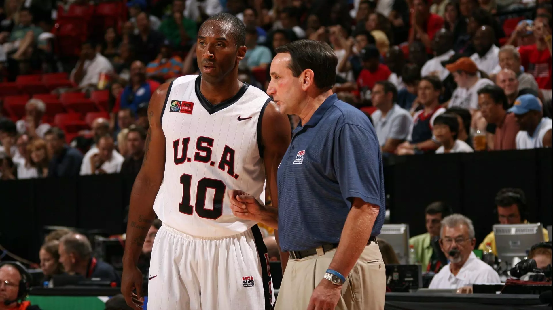
Following the bronze medal finish in 2004, the USA Basketball program underwent a total cultural reset. Kobe Bryant was the centerpiece of the “Redeem Team” in 2008, bringing a level of intensity and discipline that was previously missing from the Olympic stage.
The Mamba Mentality in Beijing
Kobe’s leadership was not just about scoring; it was about defensive tenacity and high-level basketball IQ. His presence signaled that the Olympics were a priority for the world’s best players, ultimately securing the gold medal against a formidable Spanish side.

Comparison of Olympic Basketball Eras
| Era | Focus | Key Characteristic |
|---|---|---|
| Pre-1992 | Amateurism | Outdoor courts and collegiate players |
| 1992-2004 | Globalization | The introduction of NBA superstars |
| 2008-Present | Professionalism | Elite defensive schemes and Mamba Mentality |
Frequently Asked Questions (FAQ)
- Why was the 2008 USA team called the “Redeem Team”?
- The team earned this moniker because they were tasked with restoring the prestige of American basketball after a disappointing bronze medal finish at the 2004 Athens Games.
- How did Kobe Bryant influence the 2008 Olympic team?
- Kobe brought a culture of accountability and relentless work ethic, often arriving at the gym hours before his teammates to set a standard of excellence.
- When did basketball become an Olympic sport?
- Basketball officially became a medal sport at the 1936 Berlin Summer Olympics.
- What is the primary difference between FIBA and NBA rules in the Olympics?
- While rules have converged over time, minor differences in court dimensions, three-point line distance, and foul regulations still exist between professional play and Olympic competition.