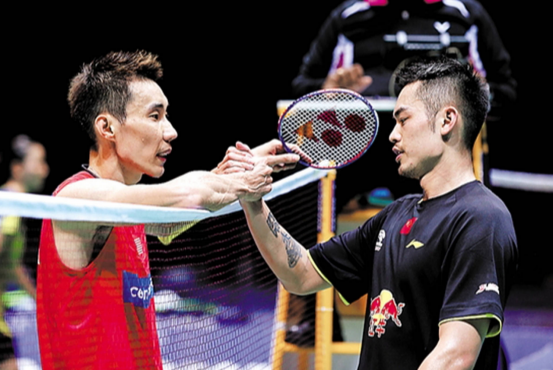
The history of modern badminton is inextricably linked to the names Lin Dan and Lee Chong Wei. Their rivalry, spanning over a decade, did more than just provide spectators with thrilling matches; it elevated the sport to new heights of athleticism and strategic complexity. While China’s road to badminton supremacy was built on a foundation of rigorous state-sponsored training, it was the specific challenge posed by Malaysia’s Lee Chong Wei that forced the Chinese program, led by the indomitable Lin Dan, to reach a level of perfection previously unseen in the racket sports world.
The Genesis of China’s Badminton Dominance
China’s ascent to the top of the badminton world was not an overnight success but a calculated multi-decade strategy. The Chinese sports system prioritized badminton as a “medal-rich” sport, investing heavily in specialized academies and high-performance coaching. By the early 2000s, this system began producing a generation of athletes who combined traditional Chinese agility with a new level of explosive power.
The “Great Wall” of Chinese badminton was built on the principle of total court coverage and relentless offensive pressure. This era saw China winning multiple Thomas Cups and Uber Cups, signaling a shift in power from traditional powerhouses like Indonesia and Denmark toward East Asia. However, the true test of this supremacy would come in the form of individual brilliance rather than just team depth.
The Role of the National Training Center
Located in Beijing, the national training center became the crucible where champions were forged. Players underwent grueling 10-hour daily sessions focusing on repetitive footwork drills, high-intensity interval training, and psychological conditioning. This environment created a “survival of the fittest” atmosphere that ensured only the most mentally resilient reached the international stage.

Lin Dan: The Strategic Brilliance of Super Dan
Lin Dan, often referred to as “Super Dan,” is widely considered the greatest badminton player of all time. His career is defined by a “big game” temperament, allowing him to perform his best under the most intense pressure of Olympic and World Championship finals. Unlike many of his predecessors, Lin Dan evolved his style over time, transitioning from a raw, explosive attacker to a master tactician.
In his early years, his game was characterized by a devastating jump smash and unmatched speed. As he matured, he incorporated a sophisticated “holding” game, using deceptive net shots to force opponents out of position before delivering a clinical finish. This adaptability made him nearly impossible to prepare for, as he could win through pure attrition or sudden bursts of aggression.
The Grand Slam Achievement
Lin Dan remains the only player to achieve the “Super Grand Slam,” winning all nine major titles in the badminton world: Olympic Games, World Championships, World Cup, Thomas Cup, Sudirman Cup, Super Series Masters Finals, All England Open, Asian Games, and Asian Championships. This feat underscores his longevity and his ability to dominate across different tournament formats and continents.

Lee Chong Wei: The Speed and Resilience of a National Hero
While Lin Dan represented the peak of a massive system, Lee Chong Wei represented the pinnacle of individual perseverance. Carrying the hopes of Malaysia on his shoulders, Lee was the only player capable of consistently challenging the Chinese hegemony. His game was built on lightning-fast footwork and a defensive capability that allowed him to retrieve shots that seemed physically impossible.
Lee Chong Wei spent a record-breaking 349 weeks as the world number one, a testament to his incredible consistency on the BWF World Tour. Despite the heartbreak of several major final losses to Lin Dan, Lee’s resilience earned him the respect of fans worldwide and the eternal gratitude of his nation, where he remains a celebrated icon of sportsmanship.

Technical Comparison: Contrasting Styles on the Court
Analyzing the technical nuances of the Lin-Lee rivalry reveals a fascinating contrast in badminton philosophy. Every encounter was a chess match played at 200 miles per hour. While both players were complete in every aspect of the game, their primary weapons differed significantly.
| Feature | Lin Dan (The Tactician) | Lee Chong Wei (The Speedster) |
|---|---|---|
| Primary Weapon | Deceptive cross-court net shots | Lightning-fast overhead smashes |
| Footwork Style | Economical and rhythmic | Explosive and high-cadence |
| Mental Approach | Psychological intimidation | Unyielding persistence |
| Defensive Strategy | Counter-attacking blocks | Incredible reach and retrieval |
Lin Dan often utilized a “left-handed advantage,” creating unusual angles that disrupted the rhythm of right-handed opponents. Lee Chong Wei countered this with superior lateral speed, often covering the entire width of the court in a single explosive step to keep the shuttle in play.

The Defining Moments: Beijing, London, and Beyond
The rivalry reached its zenith during the 2008 Beijing Olympics and the 2012 London Olympics. In Beijing, Lin Dan delivered a masterclass in front of a home crowd, overwhelming Lee in straight sets. However, the 2012 London final is often cited as the greatest match ever played. It was a 79-minute epic where Lee Chong Wei came within two points of gold, only for Lin Dan to claw back and secure his second Olympic title.
These matches were more than just sporting events; they were cultural phenomena that drew tens of millions of viewers. The mutual respect shown by both athletes after these grueling battles—often embracing at the net—became a symbol of the “Badminton Spirit,” proving that intense competition and deep friendship could coexist.

Expert Tips: Lessons from the Legends
For aspiring badminton players and enthusiasts, the Lin-Lee rivalry offers a masterclass in how to approach the sport. By studying their matches, players can extract high-level strategies to improve their own performance on the court.
- Master the Net: Both players prioritized control of the “T” area. Winning the net exchange forces your opponent to lift the shuttle, giving you the opportunity to attack.
- Vary Your Pace: Lin Dan was a master of changing the tempo. Do not play at 100% speed all the time; use slow drops and high clears to disrupt your opponent’s timing.
- Mental Resilience: Lee Chong Wei’s ability to bounce back from devastating losses highlights the importance of “next-point” thinking. Focus on the current rally, not the previous mistake.
- Physical Conditioning: The speed of these legends was built on core strength and explosive leg power. Incorporate plyometrics into your training routine to improve your court coverage.
Frequently Asked Questions (FAQ)
- Who won more head-to-head matches, Lin Dan or Lee Chong Wei?
- Lin Dan leads the head-to-head record significantly, winning 28 of their 40 professional encounters. He particularly dominated in major tournament finals, including the Olympics and World Championships.
- Why is Lin Dan called “Super Dan”?
- The nickname was coined by Peter Gade after Lin Dan won the All England Open in 2004. It reflects his “superhuman” ability to dominate the sport and his status as the only player to complete the Super Grand Slam.
- Did Lee Chong Wei ever win an Olympic Gold medal?
- No, Lee Chong Wei won three consecutive Olympic Silver medals (2008, 2012, and 2016). Despite not winning gold, his consistency at the highest level of the sport is considered one of the greatest achievements in athletic history.
- What was the fastest smash recorded by these players?
- Lee Chong Wei was known for his incredible smash speed, once recording a hit of 417 km/h (259 mph) in a tournament, which was a world record at the time for a competitive match.
- How did their rivalry impact the popularity of badminton?
- Their rivalry is credited with expanding the global reach of badminton, particularly in Europe and across Asia. Their matches were broadcast globally, attracting major sponsorships and elevating the profile of the BWF World Tour.
Related Posts
Legends of the Mat: The Ultimate Guide to Olympic Judo and Wrestling Superstars
An exhaustive exploration of the greatest combat athletes in Olympic history, detailing the technical nuances of judo and wrestling, legendary…
Legends of the Track: From Lewis and Liu to Bolt
An exhaustive exploration of track and field history, analyzing the technical brilliance of Carl Lewis, the historic breakthrough of Liu…

Li Ning: From Olympic Gymnast to Global Sports Empire Architect
A comprehensive exploration of Li Ning's extraordinary transition from a celebrated Olympic gymnast to the visionary founder of a multi-billion…