The performing arts represent one of the most dynamic and enduring forms of human expression. Serving as a mirror to society, a bridge across cultures, and a platform for pushing the absolute limits of human capability, performance art transcends mere entertainment. This comprehensive guide dissects the intricate layers of the performing arts, exploring its historical roots, its spatial evolution, its physical extremes, and its undeniable power to shape human history.
From Rituals to the Main Stage: The Historical Evolution of Performing Arts
To truly understand the modern landscape of the performing arts, one must journey back to its genesis. The evolution of performance is not a linear timeline of entertainment, but rather a complex web of spiritual, societal, and cultural transformations. Long before the existence of grand theaters and ticketed events, performance was an essential survival and spiritual mechanism for early human communities.
The Sacred Origins in Ancient Rituals
In antiquity, there was no division between the performer and the audience. Early performing arts were deeply embedded in religious ceremonies, agricultural rites, and communal healing practices. Tribal dances, rhythmic drumming, and chanted mythologies were utilized to appease deities, ensure bountiful harvests, and mourn the dead. These rituals laid the foundational syntax of theatrical expression, relying heavily on symbolism, structured repetition, and collective participation.
As societies grew more complex, these sacred rituals began to formalize. The transformation from spiritual necessity to structured performance introduced several key elements that still define the stage today:
- Narrative Structure: The transition from abstract spiritual chanting to the telling of specific mythological stories, creating the first dramatic arcs.
- Character Embodiment: Shamans and tribal leaders began donning masks and elaborate costumes, stepping out of their own identities to become gods, spirits, or ancestral heroes.
- Spatial Designation: The carving out of specific physical spaces—such as circular clearings or raised earthen mounds—dedicated solely to the act of performance.
This early spatial designation was crucial. It created a psychological boundary between the mundane world and the sacred space of the performance, a concept that would eventually evolve into the modern theatrical stage.
The Renaissance and the Birth of Formal Theater
As human civilization progressed through the Classical era and into the Renaissance, the performing arts underwent a dramatic secularization. The Greeks introduced the amphitheater, acoustics, and the concept of tragedy and comedy, but it was during the Renaissance that theater became a highly structured, commercial, and artistic institution. The introduction of the proscenium arch permanently separated the audience from the performers, framing the action like a moving painting and allowing for complex set designs and stage illusions.

Pushing the Limits: The Thrill of Circus and Acrobatics
While traditional theater focused on narrative and emotional catharsis, another branch of the performing arts evolved to explore the absolute extremes of human physical capability. The circus and acrobatics represent a unique intersection of art, athleticism, and danger, captivating audiences by defying the very laws of gravity and human anatomy.
The Anatomy of Extreme Performance Art
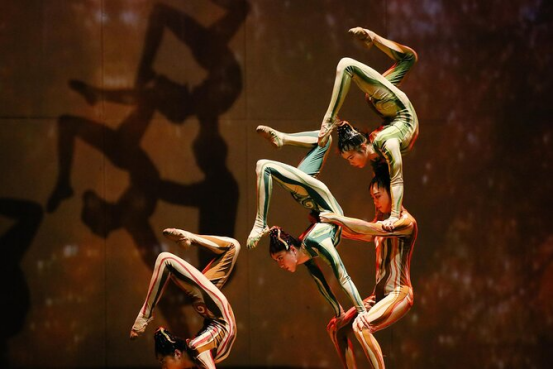
Acrobatics and circus arts are built upon a foundation of risk and physical mastery. Unlike traditional acting, which relies on emotional vulnerability, extreme performance art requires unparalleled physical discipline, spatial awareness, and mutual trust among performers. The sheer spectacle of a trapeze artist soaring through the air or a contortionist bending into impossible shapes triggers a visceral, physiological response in the audience—a mixture of fear, awe, and exhilaration.
The training required for these disciplines is rigorous and often begins in early childhood. Performers must master multiple physiological domains to execute their routines safely and beautifully:
- Kinesthetic Awareness: An elite understanding of where the body is in space at any given millisecond, crucial for aerialists and tumblers.
- Biomechanical Efficiency: The ability to generate maximum force with minimal effort, allowing for explosive jumps and sustained balances.
- Psychological Resilience: The mental fortitude to perform highly dangerous stunts under the blinding lights of a live audience, maintaining focus despite the inherent risks.
These elements combine to create a performance that is not just visually stunning, but deeply inspiring, reminding audiences of the boundless potential of the human form.
Evolution of the Modern Circus
The concept of the circus has shifted dramatically over the centuries. From the Roman Colosseum’s brutal spectacles to the traveling tent shows of the 19th century, the circus was often viewed as low-brow entertainment. However, the late 20th century saw the rise of the “nouveau cirque” (contemporary circus), pioneered by companies like Cirque du Soleil. This movement stripped away the use of live animals and integrated high theatricality, original musical scores, and complex narratives into acrobatic displays, elevating the circus to a highly respected fine art form.

Breaking Boundaries: From Traditional Theaters to Street Performances
The physical space in which a performance occurs fundamentally alters the relationship between the artist and the audience. For centuries, the performing arts were confined to the velvet-lined walls of grand theaters, making them exclusive events accessible primarily to the wealthy elite. However, a revolutionary shift has occurred, pushing art out of the theater and into the raw, unpredictable environment of the streets.
The Democratization of Performance Space
Street performance, or busking, is the ultimate democratization of the arts. By removing the barriers of ticket prices, dress codes, and formal seating, street theater makes high-quality performance accessible to the general public. The street becomes a boundless stage where the architecture of the city—staircases, park benches, and lampposts—serves as a dynamic, interactive set design.
This transition from indoor to outdoor spaces requires a completely different skill set from the performers. They must become masters of crowd psychology and environmental adaptation:
- Spontaneous Engagement: Street performers must possess the charisma to stop busy pedestrians in their tracks and build an audience from scratch within minutes.
- Environmental Integration: Artists must adapt to unpredictable elements, incorporating passing sirens, weather changes, and hecklers into the fabric of the performance.
- Breaking the Fourth Wall: Unlike traditional theater, street performance relies heavily on direct eye contact, physical interaction, and audience participation to maintain engagement.
This raw and unfiltered form of performance strips away the artificiality of the traditional stage, creating a hyper-authentic connection between human beings in a shared public space.
Immersive and Site-Specific Performances
Beyond spontaneous street busking, the modern era has seen the rise of site-specific and immersive theater. These performances are meticulously designed for non-traditional spaces—such as abandoned warehouses, historical ruins, or moving trains. In these environments, the audience is no longer a passive observer sitting in the dark; they are active participants who can roam freely, touch the props, and choose which narrative threads to follow, fundamentally altering the traditional power dynamics of performance.

Cultural Communication: Performing Arts as a Universal Language
In an increasingly globalized world, the performing arts serve as a vital bridge for cultural communication. While spoken languages can create barriers and misunderstandings, the emotional resonance of music, dance, and physical theater transcends linguistic borders, offering a universal medium for human connection and empathy.
Bridging the Linguistic Divide
When a traditional Japanese Kabuki troupe performs in Paris, or a West African drum ensemble plays in New York, the audience does not need to speak the performers’ native language to understand the core emotional narrative. The performing arts utilize a shared human vocabulary of rhythm, melody, facial expression, and bodily movement to convey joy, sorrow, conflict, and resolution.
This cross-cultural exchange is essential for global harmony. It fosters a deep appreciation for the nuances of different heritages. To maximize the impact of cultural communication, international performance festivals and collaborative projects often focus on several key initiatives:
- Preservation of Intangible Heritage: Protecting indigenous dances, oral storytelling traditions, and ancient musical techniques from the threat of globalization and cultural homogenization.
- Fusion and Innovation: Encouraging artists from vastly different backgrounds to collaborate, resulting in entirely new genres that blend, for example, classical ballet with contemporary hip-hop, or traditional folk instruments with electronic soundscapes.
- Empathy Building: Exposing audiences to the historical struggles, triumphs, and daily realities of foreign cultures, dismantling stereotypes and fostering global solidarity.
Through these mechanisms, the stage becomes a diplomatic arena, where cultural exchange is negotiated not through political treaties, but through the shared experience of artistic beauty.

Catalysts for Change: How Performing Arts Influence Social History
Art does not exist in a vacuum; it is deeply intertwined with the socio-political climate of its time. Throughout history, the performing arts have not merely reflected societal norms—they have actively challenged them, serving as powerful catalysts for social change, political revolution, and human rights advancements.
Theater as a Mirror and a Hammer
As the playwright Bertolt Brecht famously stated, “Art is not a mirror held up to reality, but a hammer with which to shape it.” Performing arts possess the unique ability to humanize abstract political issues. A powerful play or a poignant dance routine can bypass intellectual defenses and strike directly at the emotional core of an audience, inspiring them to question authority and advocate for justice.
The impact of performing arts on social history can be observed across various dimensions. To truly grasp the magnitude of this influence, we can categorize the social functions of performance into distinct historical mechanisms:
| Mechanism of Change | Historical Context & Example | Societal Impact |
|---|---|---|
| Protest Theater | Anti-Apartheid plays in South Africa (e.g., works by Athol Fugard). | Exposed the brutal realities of systemic racism to international audiences, accelerating global boycotts. |
| Grassroots Music | Folk music during the 1960s American Civil Rights Movement. | Provided anthems of solidarity (e.g., “We Shall Overcome”) that unified diverse groups of activists. |
| Satire and Comedy | Underground cabaret in Weimar Germany. | Used humor to subvert authoritarian propaganda, providing a psychological release and a platform for dissent. |
| Documentary Theater | Modern verbatim theater (e.g., “The Laramie Project”). | Forces communities to confront hate crimes and societal prejudices by staging real, unedited interviews. |
The Psychological Impact on the Masses
The collective experience of sitting in a theater or standing in a crowd during a powerful performance generates a phenomenon known as “collective effervescence.” This shared emotional synchronization makes audiences more receptive to new ideas and more likely to mobilize for a cause. When marginalized groups see their stories authentically represented on stage, it validates their existence and galvanizes community action, proving that the performing arts are an indispensable tool for historical progression.

The Future Landscape of Performing Arts: Integration and Innovation
As we look to the future, the performing arts are undergoing yet another massive paradigm shift, driven by rapid technological advancements and a growing global consciousness regarding sustainability. The boundaries of what constitutes a “stage” are expanding into the digital realm, creating unprecedented opportunities for innovation.
Technological Integration and Virtual Stages
The integration of Augmented Reality (AR), Virtual Reality (VR), and holographic projections is redefining the live performance experience. Theaters are no longer restricted by physical set pieces; they can instantly transport audiences to alien landscapes or historical battlefields using immersive digital mapping. Furthermore, live-streaming technology allows a performance happening in London to be experienced simultaneously, in high definition, by audiences in Tokyo and Buenos Aires, creating a truly global theatrical community.
Despite these high-tech advancements, the core essence of the performing arts remains unchanged. The technology serves merely as a new set of tools to enhance the fundamental human connection that has been the beating heart of performance since the days of ancient rituals. The future of the performing arts lies in the delicate balance between honoring deeply rooted historical traditions and fearlessly embracing the boundless possibilities of tomorrow.
Frequently Asked Questions (FAQ)
- Q1: How did the performing arts evolve from ancient rituals to modern theater?
- Performing arts originated in ancient societies as sacred rituals used for religious ceremonies, healing, and agricultural rites. Over millennia, these rituals formalized, developing narrative structures and character embodiments. The Classical and Renaissance periods secularized these practices, introducing formal stages, acoustics, and the proscenium arch, which separated the audience from the performers and birthed modern commercial theater.
- Q2: What makes circus and acrobatics fundamentally different from traditional acting?
- While traditional acting relies primarily on emotional vulnerability, narrative delivery, and psychological depth, circus and acrobatics are rooted in extreme physical mastery, biomechanical efficiency, and the management of real-time danger. Acrobatic arts push the absolute limits of human anatomy and gravity, eliciting a visceral, adrenaline-fueled response from the audience rather than purely intellectual or emotional catharsis.
- Q3: Why is street performance considered the democratization of the arts?
- Street performance breaks down the traditional socio-economic barriers associated with formal theater, such as high ticket prices, dress codes, and exclusive venues. By bringing high-quality art directly into public spaces, it makes performance accessible to people of all backgrounds. It also transforms the urban environment into a dynamic stage and requires performers to master spontaneous crowd engagement.
- Q4: How do the performing arts act as a universal language for cultural communication?
- The performing arts bypass linguistic barriers by utilizing the universal human vocabulary of rhythm, melody, movement, and facial expression. A powerful dance or musical performance can communicate complex emotions like grief or joy to an audience that does not speak the performer’s language, fostering global empathy, breaking down stereotypes, and preserving intangible cultural heritage.
- Q5: Can theater and performing arts actually drive tangible social change?
- Yes. Throughout history, performing arts have acted as a powerful catalyst for social change. By humanizing abstract political issues and generating “collective effervescence” among audiences, art can inspire grassroots mobilization. Historical examples include anti-apartheid protest theater in South Africa, civil rights folk music in the US, and verbatim documentary theater that forces communities to confront systemic prejudices.