The Evolution of Grappling: From Ancient Tradition to Olympic Glory
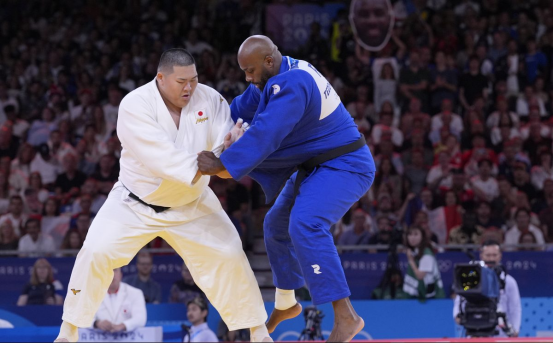
The Olympic arena has always been the ultimate proving ground for human strength and technical finesse. Among the most revered disciplines are Judo and Wrestling—sports that trace their origins back to ancient civilizations but have been refined into high-speed, tactical battles of the modern era. While wrestling dates back to the original games in ancient Greece, Judo joined the Olympic program in 1964, bringing a philosophy of “maximum efficiency with minimum effort” to the global stage. These sports are not merely about brute force; they represent a complex chess match played with the human body, where balance, leverage, and timing determine the victor.
The Philosophy of Maximum Efficiency
In Judo, the concept of ‘Seiryoku Zenyo’ (maximum efficient use of energy) is paramount. This principle dictates that a smaller opponent can defeat a larger one by using the attacker’s momentum against them. This technical depth is why Judo superstars are often seen as masters of physics as much as they are athletes. Wrestling, conversely, emphasizes control and dominance through leverage, whether in the Greco-Roman style—where only the upper body is used—or Freestyle, which allows the use of legs for both offense and defense.
| Feature | Olympic Judo | Olympic Wrestling |
|---|---|---|
| Primary Focus | Throws, joint locks, and pins | Takedowns, pins, and control |
| Attire | Judogi (Heavy cotton uniform) | Singlet (Form-fitting spandex) |
| Victory Condition | Ippon (Instant win) or points | Pin (Fall) or technical superiority |
| Historical Origin | Japan (Meiji Era) | Ancient Greece / Global Folk Styles |

Icons of the Judo Tatami: Masters of Leverage and Precision
The history of Olympic Judo is defined by individuals who transformed the tatami into a stage of absolute dominance. Names like Teddy Riner and Ryoko Tani have become synonymous with perfection. Teddy Riner, the French heavyweight, stands as a colossus in the sport, boasting multiple Olympic gold medals and an unprecedented winning streak that spanned over a decade. His success is built on a combination of immense physical stature and a technical agility that is rare for a heavyweight.
The Legacy of Technical Brilliance
Beyond Riner, the sport has seen legends like Tadahiro Nomura, the only judoka to win three consecutive Olympic individual gold medals. His mastery of the Seoi Nage (shoulder throw) became a blueprint for aspiring athletes worldwide. These superstars do not just win; they “sweep the arena” by imposing their will through superior tactical positioning and the psychological pressure that comes from years of undefeated competition.
Expert Advice: The Mental Edge in Judo
Top-tier judokas emphasize the “inner eye.” Success in elite competition requires the ability to anticipate an opponent’s movement milliseconds before it happens. This is achieved through thousands of hours of Randori (free practice), where the body learns to react instinctively to changes in weight distribution.

Titans of the Wrestling Mat: Dominance Through Strength and Strategy
Olympic wrestling has produced some of the most intimidating athletes in sporting history. Aleksandr Karelin, known as “The Russian Bear,” is perhaps the greatest Greco-Roman wrestler to ever live. His signature “Karelin Lift”—a move where he hoisted 130kg opponents off the mat and slammed them—became a symbol of his terrifying power. Karelin’s dominance was so absolute that he went undefeated in international competition for 13 years, reflecting the pinnacle of what a “strong man sweeping the arena” truly looks like.
Modern Era Dominance: Mijaín López and Saori Yoshida
In the modern era, Cuba’s Mijaín López has redefined longevity, securing four consecutive Olympic gold medals in the heavyweight Greco-Roman division. Similarly, the women’s freestyle arena was dominated for years by Japan’s Saori Yoshida, whose tactical aggression and speed earned her three Olympic golds and 13 World Championships. These athletes prove that wrestling is a sport of attrition, where the strongest mind often outlasts the strongest body.
-
Explosive Power:
The ability to execute a high-amplitude throw in a split second. -
Isometric Strength:
Maintaining a grip or hold against a resisting opponent. -
Cardiovascular Endurance:
Wrestling matches are short but involve maximum intensity, requiring elite VO2 max levels. -
Strategic Flexibility:
Adjusting the game plan mid-match based on the opponent’s defensive posture.

Training Secrets and Technical Mastery: How Champions are Made
To reach the level of an Olympic superstar, the training regimen goes far beyond the mat. Elite grapplers utilize a multidisciplinary approach that includes Olympic weightlifting for power, gymnastics for body awareness, and rigorous metabolic conditioning. The “sweep” we see in the arena is the result of a lifestyle dedicated to physical and mental hardening.
The Importance of Grip Strength and Core Stability
In both Judo and Wrestling, the hands are the primary tools of engagement. Superstars spend hours developing “crushing” grip strength, often using rope climbs and specialized gi-pullups. Core stability is equally vital; it is the anchor that allows a wrestler to defend a takedown or a judoka to maintain balance during a hip throw. Without a rock-solid foundation, technical skill cannot be applied effectively against a world-class opponent.
Pro Tips for Aspiring Grapplers
-
Focus on Fundamentals:
Even Olympic champions drill basic entries (Uchi-komi) daily. -
Study Film:
Analyze the footwork of legends like Saori Yoshida to understand distance management. -
Recovery is Key:
Grappling is hard on the joints; prioritize sleep, nutrition, and mobility work to ensure longevity.

Frequently Asked Questions (FAQ)
-
What is the main difference between Olympic Judo and Wrestling?
- The primary difference lies in the equipment and the techniques allowed. Judo is practiced in a ‘gi’ (uniform), which allows for grips on the clothing to execute throws and submissions. Wrestling is performed in a singlet and focuses on body-to-body contact, with no clothing grips allowed.
-
Who is the most decorated Olympic wrestler of all time?
- Mijaín López of Cuba holds the record for the most consecutive gold medals in Greco-Roman wrestling (four), while Aleksandr Karelin is often cited as the most dominant due to his long undefeated streak.
-
Can a judoka compete in Olympic wrestling?
- While the skill sets overlap, the rules are very different. Some athletes have transitioned between the two, but at the Olympic level, the specialization required for each sport makes it extremely difficult to compete in both simultaneously.
-
How are weight classes determined in these sports?
- Weight classes are strictly enforced to ensure fair competition. Athletes must weigh in before the tournament. These classes range from flyweight to heavyweight, ensuring that skill and technique are the deciding factors rather than just size.
-
Why is Judo considered a “mental” sport?
- Judo relies heavily on the principle of “using the opponent’s strength against them.” This requires intense mental focus, the ability to read an opponent’s intentions, and the patience to wait for the perfect moment to strike.