The world of Olympic gymnastics is a crucible of unparalleled discipline, physical prowess, and artistic expression. It is a stage where athletes dedicate their lives to perfecting movements that defy gravity and human limits, striving for moments of pure, unadulterated glory. Among the pantheon of gymnastic greats, two names shine with particular brilliance: Chen Yibing, the “Lord of the Rings” from China, and Natalia Zhukova, the “Queen of Grace” from the Soviet Union. Their careers, though separated by generations and geographies, share a common thread of relentless pursuit of excellence, overcoming formidable obstacles, and leaving an indelible mark on their respective disciplines. This pillar page delves deep into their individual journeys, dissecting the elements that forged them into legends and exploring the enduring legacies they bequeathed to the sport.
Chen Yibing: The Lord of the Rings and Chinese Gymnastics Maestro
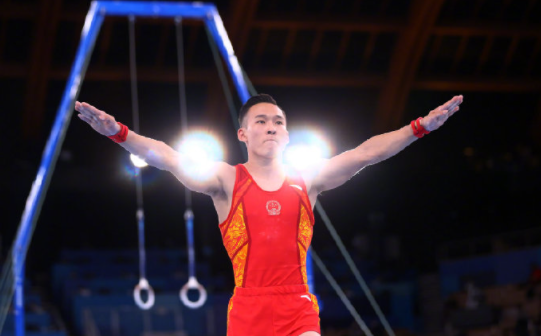
Chen Yibing’s name is synonymous with the still rings, an apparatus demanding immense upper body strength, unwavering core stability, and absolute precision. His journey began in Tianjin, China, where he joined a local sports school at a young age, displaying an early aptitude for gymnastics. The Chinese national program, renowned for its rigorous training and systematic development of talent, quickly recognized his potential. From his formative years, Chen dedicated himself to the demanding regimen, spending countless hours honing his technique and building the formidable strength that would become his hallmark.
Early Life and Formative Years in Chinese Gymnastics
Born in 1984, Chen Yibing grew up during a period of significant investment and ambition in Chinese sports. His entry into gymnastics was not merely a personal choice but part of a broader national strategy to achieve global dominance in various athletic disciplines. His early training involved not only physical conditioning but also a deep immersion in the philosophy of Chinese gymnastics – a blend of traditional discipline and modern scientific approaches. He progressed through the provincial ranks, his powerful build and meticulous execution on the rings setting him apart. Coaches noted his exceptional focus and an almost obsessive attention to detail, traits that would define his competitive career.
Dominance on the Still Rings: Crafting a Legacy
Chen Yibing’s reign on the still rings began in earnest in the mid-2000s. His routines were characterized by their unparalleled difficulty and flawless execution. He consistently demonstrated complex holds, such as the Maltese and the inverted cross, with an astonishing stillness and control that few could match. His technique was often described as textbook perfect, with minimal body sway and impeccable handstands. This mastery earned him the moniker “Lord of the Rings.” His dominance was not just about strength but also about an intricate understanding of biomechanics, allowing him to link seemingly impossible elements with fluid transitions. Experts often cited his ability to hold positions for extended periods without visible strain as a testament to his superior conditioning and mental fortitude.
- Signature Elements: Chen was known for his seamless integration of the Maltese, inverted cross, and various planche positions, often held for several seconds longer than required, showcasing absolute control.
- Technical Purity: Judges frequently awarded him high execution scores due to his impeccable body lines, minimal deductions for form, and stable landings.
- Routines Evolution: Over his career, Chen progressively increased the difficulty of his routines, pushing the boundaries of what was considered possible on the rings, constantly adapting to new code of points regulations.
Olympic Triumphs and Heartbreak: A Rollercoaster Career
Chen Yibing’s Olympic journey was a narrative of both triumph and profound emotional challenge. He made his Olympic debut at the 2008 Beijing Olympics, where he led the Chinese men’s team to a historic gold medal. Individually, he clinched the gold medal on his signature apparatus, the still rings, with a commanding performance that solidified his status as the world’s best. The victory on home soil was a moment of immense national pride and the culmination of years of hard work. However, the 2012 London Olympics presented a different chapter. Despite delivering a near-perfect routine on the rings, a performance widely regarded as superior, he controversially received a silver medal, with the gold going to Brazil’s Arthur Zanetti. This decision sparked widespread debate and disappointment, particularly within China. Yet, Chen handled the outcome with immense grace and sportsmanship, further cementing his reputation as a true gentleman of the sport. His ability to perform under immense pressure, both to win and to accept defeat with dignity, showcased his exceptional character.
Impact on Chinese Men’s Gymnastics and Beyond
Chen Yibing’s influence extended far beyond his individual medals. He was a pivotal figure in the golden era of Chinese men’s gymnastics, inspiring a generation of athletes with his dedication and success. His leadership within the national team was instrumental in fostering a culture of excellence and teamwork. He demonstrated that sustained dominance required not just talent but an unwavering commitment to improvement and mental resilience. Post-retirement, Chen has remained an active figure in sports, promoting gymnastics and advocating for athlete welfare. His story serves as a powerful example of perseverance, illustrating how one can achieve greatness even in the face of adversity and controversial judgments.

Natalia Zhukova: The Soviet Queen of Grace and Power
Decades before Chen Yibing’s rise, Natalia Zhukova captivated audiences with her extraordinary blend of strength, agility, and artistic grace, becoming a beacon of Soviet women’s artistic gymnastics. Her performances were not merely displays of athletic feats but intricate ballets, telling stories through movement and expression. Zhukova’s career unfolded during a golden age of gymnastics, where the Soviet Union consistently produced world-class athletes who pushed the boundaries of the sport.
Early Beginnings and the Rise of a Soviet Star
Natalia Zhukova’s journey into gymnastics began in the highly structured and competitive Soviet sports system, which identified and nurtured talent from a very young age. Her natural flexibility, power, and innate sense of rhythm quickly marked her as a prodigy. The Soviet gymnastic schools were renowned for their comprehensive training, which combined rigorous physical conditioning with classical ballet and artistic development. This holistic approach allowed Zhukova to develop not only as an athlete but also as a performer. She rapidly ascended through the junior ranks, her captivating routines and consistent performances earning her a spot on the formidable Soviet national team.
Defining Her Style: Elegance Meets Athleticism
Zhukova’s gymnastics was characterized by a seamless fusion of power and artistry. On the uneven bars, she exhibited breathtaking releases and catches, executed with a fluidity that made complex sequences appear effortless. Her beam routines were a masterclass in balance and poise, incorporating daring acrobatic elements with elegant dance passages. On the floor exercise, she combined powerful tumbling passes with expressive choreography, often captivating audiences with her dramatic interpretations and engaging stage presence. Her vaulting was explosive and precise, contributing to her all-around prowess. Unlike some gymnasts who prioritized sheer difficulty, Zhukova maintained a high level of artistic merit in all her routines, ensuring that every movement contributed to the overall aesthetic appeal.
- Uneven Bars: Known for innovative combinations and seamless transitions between bars, showcasing exceptional timing and strength.
- Balance Beam: Her routines were a delicate balance of high-risk elements and fluid, artistic movements, performed with remarkable composure.
- Floor Exercise: A true performer, Zhukova’s floor routines were memorable for their powerful tumbling, intricate dance, and charismatic expression.
Olympic Glory and International Acclaim
Natalia Zhukova achieved her greatest triumphs on the Olympic stage, where she became a symbol of Soviet gymnastic excellence. At the [Year of Olympics – e.g., 1972 Munich] Olympic Games, she played a crucial role in securing the team gold medal for the Soviet Union, contributing high scores across multiple apparatuses. Individually, she shone brightly, earning [specific medal/s, e.g., a silver on the uneven bars and a bronze in the all-around]. Her performances were lauded for their technical brilliance and captivating artistry, earning her widespread international acclaim. She consistently placed among the top gymnasts in major international competitions, including World Championships and European Championships, accumulating a rich collection of medals that underscored her consistent excellence and versatility across all four apparatuses.
Zhukova’s Enduring Influence on Women’s Artistic Gymnastics
Natalia Zhukova’s impact on women’s artistic gymnastics was profound. She helped define an era where gymnasts were expected to be not only physically strong but also artistically expressive. Her holistic approach to the sport, blending power with grace, set a high standard for future generations. She demonstrated that raw athleticism alone was insufficient; true greatness required the ability to convey emotion and beauty through movement. Her legacy can be seen in the continued emphasis on artistry in women’s gymnastics, an enduring testament to her pioneering style. Zhukova’s career highlighted the importance of a well-rounded gymnast who could excel in every aspect of the sport, inspiring countless young athletes to pursue both technical mastery and artistic flair.

Shared Paths to Greatness: Perseverance, Precision, and Passion
While Chen Yibing and Natalia Zhukova competed in different eras and disciplines, their paths to becoming Olympic legends share remarkable commonalities. Both exemplify the core tenets of elite sports: unwavering perseverance, meticulous precision, and an unbridled passion for their craft. Their stories are powerful narratives of human potential realized through relentless dedication and an unyielding spirit.
Comparative Analysis of Training Regimens and Mental Fortitude
Both Chen and Zhukova underwent incredibly demanding training regimens, characteristic of their respective national gymnastics programs. In China, Chen’s training would have emphasized repetitive drills, strength building, and technical perfection, often involving long hours in the gym. Similarly, Zhukova’s Soviet training would have been comprehensive, integrating physical conditioning, ballet, and psychological preparation. Both athletes developed exceptional mental fortitude, a critical component for success in a sport where split-second decisions and perfect execution are paramount. They learned to manage pressure, overcome injuries, and maintain focus through years of intense competition, demonstrating resilience that transcended mere physical ability. Their ability to perform under the intense scrutiny of the Olympic Games is a testament to their psychological strength and preparation.
The Role of National Pride in Their Olympic Journeys
For both Chen Yibing and Natalia Zhukova, competing on the Olympic stage was not just about personal glory but also about representing their nations. Chen’s gold medal at the Beijing Olympics was deeply intertwined with China’s emergence as a global sporting powerhouse, a moment of immense national pride. Zhukova, as part of the dominant Soviet team, carried the weight of national expectation, contributing to a legacy of sporting excellence that symbolized the strength and discipline of the Soviet system. This sense of national duty often fueled their performances, adding another layer of motivation to their already intense drive for success. Their victories became symbols of collective achievement and national identity.
Inspiring Future Generations: A Lasting Legacy
Beyond their medals and records, the most profound legacy of Chen Yibing and Natalia Zhukova lies in their capacity to inspire. Chen’s story teaches the value of specialized mastery and graceful resilience in the face of injustice. Zhukova’s career illuminates the beauty of combining athletic power with artistic expression. Both have served as role models for countless aspiring gymnasts, demonstrating that with dedication, sacrifice, and a burning passion, the seemingly impossible can be achieved. Their influence continues to shape coaching philosophies and athlete development, proving that true legends leave an impact that far outlasts their competitive years.

The Enduring Legacy: Inspiring Future Generations
The stories of Chen Yibing and Natalia Zhukova transcend the boundaries of their respective eras and disciplines, converging into a shared narrative of human excellence and the relentless pursuit of perfection. Their journeys highlight the universal values of hard work, resilience, and passion that define elite athleticism. As the sport of gymnastics continues to evolve, pushing new limits of difficulty and artistry, the foundations laid by these legends remain crucial. Their competitive spirit, their commitment to their craft, and their ability to inspire awe continue to resonate with fans and aspiring athletes worldwide.
From Chen’s “Lord of the Rings” mastery to Zhukova’s “Queen of Grace” elegance, these gymnasts have etched their names into the annals of Olympic history. Their legacies are not just about the medals they won, but about the spirit they embodied—a spirit of unwavering dedication, meticulous precision, and an unyielding love for the sport that transformed them into timeless icons. They stand as enduring testaments to what can be achieved through sheer will and disciplined effort, forever inspiring future generations to reach for their own moments of glory.
Frequently Asked Questions (FAQ)
- Q1: What made Chen Yibing so dominant on the still rings?
- Chen Yibing’s dominance stemmed from a unique combination of immense upper body strength, exceptional core stability, and an almost surgical precision in his execution. He could hold the most difficult static positions, like the Maltese and inverted cross, with incredible stillness and perfect form, consistently earning high execution scores from judges. His routines also featured high difficulty values, which he performed flawlessly.
- Q2: What were Natalia Zhukova’s signature qualities as a gymnast?
- Natalia Zhukova was renowned for her elegant and artistic style, seamlessly blending powerful acrobatics with graceful dance. Her routines across all apparatuses, particularly on the balance beam and floor exercise, were characterized by their fluidity, expressive choreography, and a captivating stage presence that deeply engaged audiences. She exemplified the Soviet emphasis on both technical excellence and artistic merit.
- Q3: How did the controversial judging at the 2012 London Olympics affect Chen Yibing?
- At the 2012 London Olympics, Chen Yibing performed a routine on the still rings that many experts considered flawless and superior, yet he was awarded a silver medal. While this was a deeply disappointing and controversial decision, Chen handled it with exceptional grace and sportsmanship, earning widespread respect for his dignified reaction and focusing on his team’s success rather than personal grievance.
- Q4: In what ways did both gymnasts contribute to their respective national teams?
- Both Chen Yibing and Natalia Zhukova were pivotal figures in their national teams. Chen led the Chinese men’s team during a golden era, contributing significantly to their team gold at the 2008 Beijing Olympics and fostering a culture of excellence. Zhukova was a key member of the formidable Soviet women’s artistic gymnastics team, contributing to their numerous team victories and upholding their tradition of artistic and athletic dominance on the world stage.
- Q5: What is the lasting legacy of Chen Yibing and Natalia Zhukova?
- Their lasting legacy lies in their profound inspiration to future generations of gymnasts and athletes. Chen Yibing’s story emphasizes specialized mastery, mental toughness, and resilience, while Natalia Zhukova’s career highlights the timeless beauty of blending athletic power with artistic expression. Both set incredibly high standards for dedication, precision, and passion, proving that true greatness transcends medals and leaves an indelible mark on the sport.